

Addressing the Challenges of Inquiry Based Learning (IBL)
Mr. Anderson
Mr. Anderson had always been known as a dedicated and passionate science teacher. For over fifteen years, he had inspired countless students with his enthusiasm for the wonders of the natural world. He had a knack for transforming even the driest concepts into engaging lessons that left his students wide-eyed with curiosity. However, as the world grappled with the fallout from COVID-19, Mr. Anderson found himself in uncharted territory.
Returning to in-person teaching after months of virtual classrooms, he quickly noticed a troubling shift. His once eager students seemed distant, their attention fragmented and their interest waning. Even his most reliable students, who typically excelled in academics, were increasingly distracted and disruptive.
In the past, Mr. Anderson’s repertoire of well-crafted lessons, interactive labs, and enlightening lectures never failed to captivate his students. But now, with resources dwindling and budgets tightening, he struggled to rekindle the spark of curiosity in their eyes. The tried and true methods that had once filled his classroom with excitement now left him feeling defeated and weary.
As he sat at his desk one afternoon, overwhelmed by a stack of unmarked papers and a list of classroom incidents to address, Mr. Anderson stumbled upon an article discussing the DRiVe framework for inquiry-based learning (IBL). The idea intrigued him—a teaching approach that could empower students to take charge of their learning and ignite their innate curiosity. Yet, doubts nagged at him. Time was a scarce commodity, and with the pressure to cover curriculum standards, experimenting with new methods felt daunting.
Despite his reservations, Mr. Anderson couldn’t shake the feeling that DRiVe might hold the potential to reinvigorate his classroom. He imagined his students forming questions, conducting experiments, and engaging with science in a way that was meaningful to them. But he wrestled with the fear that embarking on such a journey might lead to chaos, further complicating an already challenging environment.
One evening, after another exhausting day, Mr. Anderson found himself reflecting on his motivations for becoming a teacher. He remembered the joy of discovery that had drawn him to science as a young boy and the profound wish to instill that same passion in others. It was then, amidst these reflections, that he realized he was at a crossroads. Continuing the old path was increasingly impractical, yet embracing change seemed equally uncertain - retirement was under consideration.
With a deep breath, he decided to reach out to a colleague renowned for her success using DRiVE and IBL. Encouraged by her experiences and reassurances that the transition could begin with small, manageable DRiVe steps and simple graphic organizers, Mr. Anderson felt a glimmer of hope. He resolved to pilot a DRiVe lesson with his next unit, focusing on cultivating curiosity and authentic engagement.
The following week, he entered his classroom not as the 'sage-on-the-stage' but as a facilitator of discovery. He presented his students with one of his tried and true demonstrations and asked them to perfectly replicate it. He wandered about and supervised as students worked on their precision and developed new skills. Mr. Anderson then encouraged the class to vary the experience and explore, hypothesize, and collaborate. To his surprise, the atmosphere in the room shifted almost palpably. Students engaged eagerly in discussions, their natural curiosity guiding them to ask questions and seek out solutions.
While not without challenges, the shift towards Inquiry-Based Learning began to breathe new life into his classroom. Students were learning science not just from textbooks but by experiencing it themselves, leading to deeper understanding and engagement. In stepping away from his old methods and embracing change, Mr. Anderson discovered not only a renewed passion for teaching but also a sense of connection with his students that he hadn’t felt in years.
Through this journey, he came to realize that in the post-COVID era, adaptability and a willingness to embrace the unknown were not just valuable skills but essential ones. And perhaps, in his willingness to learn and grow alongside his students, he found a more profound lesson than any he could teach from a book.
-
Inquiry-based learning can indeed take more time than traditional instruction, but the results are well worth it. The DRiVE process breaks down the learning into small, manageable chunks that you can spread over multiple class periods, making it easy to implement.
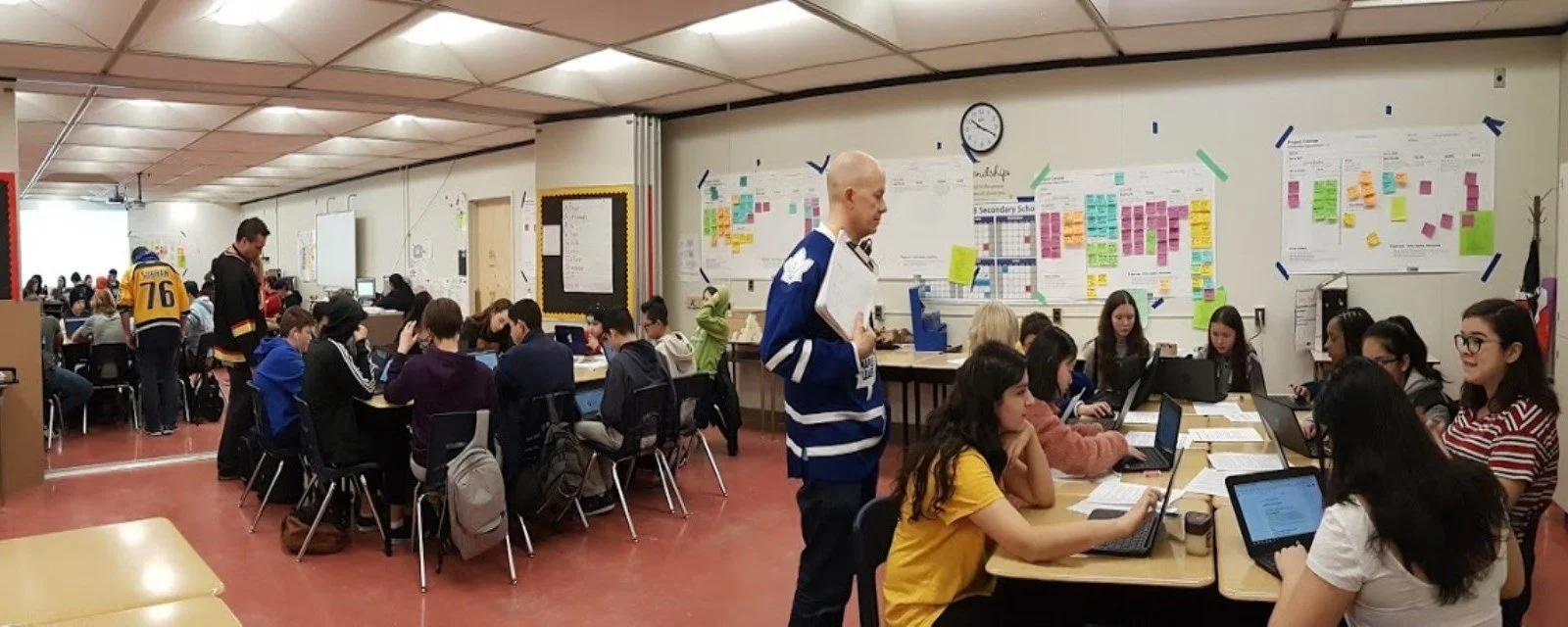
Our experience has shown that students become so engaged that they often express surprise at how quickly class time flies and are motivated to continue working on their projects outside of class. This level of interest and dedication highlights the profound impact of the DRiVE approach on student engagement and learning.
-
Transforming traditional science classroom demonstrations into hands-on experiments and investigations need not be daunting. By being creative and resourceful, DRiVe helps you utilize many everyday items for scientific explorations. This approach not only makes experiments more accessible but also adds an element of excitement and discovery for students.
Consider reaching out to community partners like local businesses, universities, or museums for additional support and resources. By doing so, you'll find that you can provide engaging, memorable experiences that empower students to take charge of their learning and see science in the world around them.
-
You’ve ALREADY started!
Remember, you are not alone in your journey to implement inquiry-based learning and the DRiVE framework. There is an active and supportive community of educators just like you who are eager to share insights and experiences.
Seek out professional development opportunities to deepen your understanding and collaborate with colleagues to exchange best practices. Together, you can inspire and support one another, creating vibrant and engaging learning environments for your students. Embrace the chance to connect and grow with like-minded teachers who are passionate about transforming education.
-
Inquiry-based learning often reveals student misconceptions, presenting a valuable opportunity for growth and understanding. Research in brain plasticity—our brain’s remarkable ability to adapt and reorganize itself—supports the idea that engaging with misconceptions can strengthen learning pathways. When students articulate their ideas, even incorrect ones, they activate neural networks, creating a foundation for deeper understanding.
By actively listening to student thoughts and identifying misconceptions, you can design targeted learning experiences that encourage students to confront their misunderstandings. This process is crucial, as addressing misconceptions head-on not only helps students rewire their thinking but also promotes critical thinking and problem-solving skills. When students test their ideas against evidence and collaborate with peers, they not only develop a more accurate understanding of scientific concepts but also build resilience and confidence in their ability to learn.
Embracing misconceptions is an integral and natural part of the DRiVe process that transforms challenges into stepping stones for deeper comprehension. This approach cultivates a dynamic classroom environment where students feel safe to explore, question, and grow. By fostering this culture of inquiry, you empower students to harness their brain's adaptability, leading to richer, more meaningful learning experiences.
-
While inquiry-based learning can present challenges in classroom management due to the increased activity and independence of students, research shows that when students are genuinely engaged, instances of misbehavior and off-task activities significantly decrease. The DRiVE framework is designed to foster this engagement by establishing clear expectations for student behaviour during inquiry-based activities.
By allowing students the freedom to move around, explore, and interact with their peers, DRiVE creates a structured yet dynamic learning environment that stimulates curiosity and investment in their learning. When students are captivated by the inquiry process, they are less likely to become distracted or disengaged.
Additionally, the DRiVE graphic organizers serve as valuable tools for teachers to quickly assess student engagement and understanding in real-time. These organizers enable educators to identify areas where students may require additional support, ensuring teachers can respond promptly and effectively. By focusing on maintaining an engaging atmosphere while implementing clear structures, you can create a classroom where off-task behaviours virtually disappear, allowing students to thrive in their learning journey.
-
Implementing inquiry-based learning (IBL) can be challenging for teachers. It requires a shift in mindset from a teacher-centered approach to a student-centered approach, and it can be time-consuming to plan and manage. The DRiVe framework is the scaffolding for teachers to successfully introduce IBL to their practice.
Modern education demands a shift from traditional, teacher-centered methods to student-centered inquiry. In today's world, students need to be equipped with critical thinking, problem-solving, and lifelong learning skills, all of which are fostered by IBL. Shift from viewing students as passive recipients of knowledge ("empty vessels") and recognize them as active learners with pre-existing ideas and a natural curiosity ("small fires/embers to be tended").
Move away from the traditional role of a knowledge provider and become a facilitator of learning. This requires letting go of control, embracing student questions and ideas, and trusting in the power of student-driven exploration. Educators need to develop the skills and confidence to guide students through the inquiry process, providing appropriate scaffolding and support while allowing students to take ownership of their learning.
This guide aims to equip teachers with the necessary knowledge and strategies to effectively implement the DRiVe framework and embrace the power of student-centered inquiry.